To reduce returns in ecommerce that come from size, show every product next to an object the shopper already knows, such as a credit card, a phone, a laptop or a person, at the same scale. Correct measurements are not enough. Shoppers read “38 × 26 × 12 cm” (15 × 10 × 4.7 in), cannot picture it, guess, and then write “smaller than expected” when the parcel arrives.
This guide explains why the measurements on your product page do not stop that review, what returns cost an online shop, and the change that fixes it in one afternoon.
Why do customers say a product is smaller than expected?
Customers say a product is smaller than expected because they judged its size from the photos, not from the measurements. A number such as 30 centimetres, or 12 inches, does not create a picture in the mind, and a product photo has no scale, because the product fills the frame whatever its real size. The shopper fills the gap with a guess.
In September 2025 a seller in the r/EtsySellers community wrote that buyers had docked stars for items being “smaller than expected”, even though every listing gave the dimensions and showed scale in the photos (Reddit). The measurements were right. The shopper’s picture of them was wrong.
Numbers do not make a mental picture
Most people cannot turn a length in centimetres or inches into an image of an object. In a usability study published in 2017 by the Baymard Institute, many test subjects had difficulty visualising ounces, cubic feet, inches and weight, and generally preferred product images to specifications.
A second Baymard study, published in October 2024, found that almost every participant who saw only text dimensions had trouble connecting the measurements to the parts of the product they described. Baymard reports that most uncertain shoppers abandon the product, and the rest misjudge it and are more likely to return it.
Size in three directions is especially hard to judge. Pierre Chandon and Nailya Ordabayeva showed in the Journal of Marketing Research in 2009 that people underestimate how much bigger a package is when its height, width and depth all grow at once. As INSEAD summarised it, a container that grows 26 percent in each direction holds twice as much, and people underestimate that increase. The same arithmetic applies to a product page: a bag of 38 × 26 × 12 cm (15 × 10 × 4.7 in) and one of 30 × 21 × 10 cm (12 × 8.3 × 3.9 in) differ by 2 to 8 centimetres per side, yet the first holds almost twice as much.
Product photos have no scale
A product photo shows shape, colour and detail, but not size, because it has nothing in it to compare against. Baymard found that 42 percent of users try to judge a product’s size from its images, and that 28 percent of the 60 large shops it tested had no image showing the product at scale, even for their best sellers (Baymard, 2017).
Photographers frame each product to fill the picture, and that removes the one cue a picture can give. Talia Konkle and Aude Oliva found that people draw, imagine and prefer to view objects at a consistent share of the frame, and that share grows with the object’s real size: small objects look right small in the frame, large objects look right large (Journal of Experimental Psychology, 2011). Product photos break that habit. When an earring and a suitcase both fill the frame, the photo gives the shopper nothing to tell them apart.
A commenter in the r/jewelry community put it plainly in July 2026: jewellery always looks bigger in photos because the camera zooms in, and even with exact dimensions, “a lot of people are still surprised by the actual size of a piece” (Reddit).
Writing the measurements again does not help
The usual reaction to a “smaller than expected” review is to add the measurements again, in bold, higher on the page. It rarely changes anything, because the shopper who left the review usually saw the numbers already. A number alone does not show how big something is, however large the font.
What shoppers do when the product page cannot show size
Shoppers who care about size work it out themselves, away from your page. They borrow an object they know and compare.
- A familiar object in the photo. A reviewer in the r/AmazonVine community explained that when size is hard to gauge, the review gets a photo of the item next to something else, because the reviewer is “awful at visualizing size” (Reddit, 2025).
- Tape on the floor. One commenter advises a new renter to buy masking tape, outline each piece of furniture on the floor from its measurements, and live with it for a few days before deciding (Reddit, 2026).
- A second order. A backpack buyer found the interior “smaller than I had expected” and ordered a second model to compare side by side before the return period ended (Reddit, 2022).
Each of these is the shopper doing the job the product page did not do. The fix is to do that job on the page.
How many online purchases are returned, and how many because of size?
United States shoppers were expected to return 849.9 billion dollars of merchandise in 2025, according to the National Retail Federation and Happy Returns. Retailers expect 15.8 percent of all sales to come back, and 19.3 percent of online sales. Every return costs shipping, handling and often a product that cannot be sold as new.
No large survey separates size returns for physical products from the rest, but the nearest measures point the same way. In the Rithum 2025 Global Returns report, based on more than 6,000 consumers, a third of respondents said they had returned a product because it did not match its online description or images. In pet supplies, incorrect sizing caused 48 percent of returns at Galaxus, a large Swiss online retailer, in 2025, as reported by GlobalPETS.
| What a size surprise costs | Where it shows up |
|---|---|
| Return shipping and handling | Your margin on that order |
| A product returned opened or used | Stock you sell at a discount or write off |
| A one or two star review | The conversion rate of every future visitor |
| A shopper who abandons instead | A sale you never see, so it never appears in a report |
For many shops the review hurts more than the return. A return costs one order. A review that says “smaller than expected” sits under the product and is read by every shopper after.
How to reduce returns in ecommerce caused by size: the one-afternoon fix
The fix is to show each product next to objects your shopper already owns, at the same scale, on the product page itself. It needs no new photography studio, no developer and, unlike augmented reality in retail, no camera. A shop with a few dozen products can finish it in an afternoon.
- Find the products that get size complaints. Search your reviews, return reasons and customer emails for “small”, “big”, “expected”, “size” and “fit”. Start with the five products that appear most often.
- Pick reference objects your shoppers own. Choose objects with one fixed size everywhere, such as a credit card, a can, a phone, an A4 or Letter sheet, or a laptop. Avoid fruit, which differs from one to the next, and coins, which differ by country. Use the table below.
- Match the object to the product’s size. Compare a ring with a credit card, a bag with a laptop or a person, a lamp with a sofa. The object should be within a few times the product’s size, or one of them becomes a dot.
- Show the product and the object at the same scale. Either photograph them side by side at the same distance, or use a tool that draws both from their real measurements.
- Put the comparison next to the product photos. Not in a tab, not on a separate size guide page. A shopper who has to open a second page usually does not.
- Add a dimensions image for complex products. Baymard recommends an image that labels where each measurement is taken, close to the written dimensions (Baymard, 2024).
- Answer the old reviews. Reply to each “smaller than expected” review with the size compared to a familiar object, so the next reader sees the answer under the complaint.
Which reference object to compare your product with
The best reference object is one the shopper owns, holds every day and knows by feel. Cards, passports and paper sheets follow international standards. The can and the laptop are common models whose size rarely changes.
| Reference object | Size (cm) | Size (in) | Good for |
|---|---|---|---|
| Credit card (ISO/IEC 7810 ID-1) | 8.56 × 5.40 | 3.37 × 2.13 | Jewellery, wallets, small accessories |
| Passport (ISO/IEC 7810 ID-3) | 12.5 × 8.8 | 4.9 × 3.5 | Pouches, travel accessories, small bags |
| 12 fl oz drinks can (United States) | 6.6 × 12.2 | 2.6 × 4.8 | Bottles, candles, cosmetics, mugs |
| A4 sheet of paper (ISO 216) | 21.0 × 29.7 | 8.3 × 11.7 | Prints, stationery, trays, tote bags |
| 13-inch MacBook Air (Apple) | 30.4 × 21.5 | 12.0 × 8.5 | Bags, backpacks, desk products |
| Adult woman (CDC average) | about 161 tall | 63.5 tall | Furniture, lamps, luggage, bicycles |
Here are a card, a can, a phone, an A4 sheet and a laptop at true scale. Scroll sideways if they do not fit your screen.
-
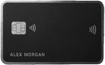 Credit card Credit card
-
 Coca-Cola Original 12 fl oz can 12 fl oz can
-
 Apple iPhone 17 Pro iPhone 17 Pro
-
 ISO 216 A4 sheet of paper A4 sheet
-
 Apple MacBook Air 13-inch MacBook Air 13-inch
A shopper who reads “30 × 21 cm” (12 × 8.5 in) has to imagine it. A shopper who sees the product next to a laptop can see how the two compare.
See the fix working on a product page
Below is a size comparison running live on this page: a leather shoulder bag 39 centimetres wide and 48.2 centimetres tall, about 15.4 by 19 inches, next to everyday objects at the same scale.
The question a bag shopper asks most is whether a laptop fits, as the search data in handbags that can fit a laptop shows. The comparison puts that question on the product page, before the order, where the shopper can still choose another size.
Showing size against familiar objects is not new
Showing size against familiar objects is not a new idea. Tangiblee, which builds product visualisation tools for online retailers, began with a “larger than expected” moment.
Eliad Inbar, the chief executive of Tangiblee, ordered diamond earrings online for his wife before their anniversary in 2012. In an interview Tangiblee published in 2022, he said, “The size of the earrings was much larger than I had anticipated.” He bought a more suitable pair at a local jewellery store. The gap between judging an object in a shop and judging it online led him and his co-founder to ask shoppers about their online buying problems. Many cited size, so Tangiblee started there.
Every shop that sells online faces the same gap, whatever its size. The method is the same: put the product next to something the shopper knows. If you are weighing a Tangiblee alternative, we compare the two.
Add a size comparison to your product pages
We have worked with shops selling bags, baby products, children’s tableware, furniture and garden products. Shops that sell bags get the same question every week: will my laptop fit? Across all of these shops, shoppers have made about 400 size checks across roughly 300 product pages, each time asking the size question on the page, before the order, instead of after it. We explain what those checks showed in how big is this.
EasySizes adds the size comparison above to a product page. You type in each product’s measurements once and choose the objects your shoppers can compare it with. It is built for physical products, not clothing size charts.
Questions about reducing ecommerce returns
How do you reduce returns in ecommerce?
Find the main reason products come back, then fix the product page for that reason. For physical products, size is a common one. Show each product next to a familiar object at the same scale, add an image that labels each measurement, and keep both next to the product photos so shoppers judge size before they order.
How do you reduce product returns caused by size?
Replace the guess with a comparison. Show the product beside a credit card, a phone, a laptop or a person, at the same scale, on the product page. Start with the products whose reviews or return reasons mention size most often.
Why do customers say an item is smaller than expected when the measurements are correct?
Because most people cannot picture a measurement, and product photos have no scale. Baymard Institute found that shoppers struggle to visualise inches and other units, and that 42 percent judge size from the product images instead, where every product fills the frame.
What are the ecommerce returns best practices for physical products?
Show size against familiar objects, label dimensions on an image, describe the product accurately, photograph it in use, and read return reasons every month to find the next product to fix. A clear returns policy matters too, but it handles returns after they happen rather than preventing them.
What percentage of online purchases are returned?
The National Retail Federation and Happy Returns estimated that 19.3 percent of online sales in the United States would be returned in 2025, compared with 15.8 percent of all retail sales. The rate differs widely by category.