Dog crates are sold by length, in sizes from 18 to 48 inches. To choose one, measure your dog from the nose to the base of the tail and add 4 inches. That total is the crate length you need. A dog under 10 pounds usually needs an 18 to 22 inch crate, and a Labrador Retriever usually needs 42 inches.
The chart below gives every size. After the chart come the measurements for four popular breeds, the one mistake that makes people buy a second crate, and what a 42 inch crate looks like next to a person and a doorway.
Dog crate size chart by weight
Find your dog’s adult weight in the first column. The second column gives the crate length to look for. The weight ranges come from the PetSmart dog crate size chart, and the dimensions are typical for folding wire crates.
| Dog’s weight | Crate length | Typical crate dimensions (length × width × height) | Breeds usually this size |
|---|---|---|---|
| Under 10 lb (4.5 kg) | 18 to 22 in | 18 × 12 × 14 in (46 × 30 × 36 cm) | Chihuahua, Yorkshire Terrier, Maltese |
| 11 to 25 lb (5 to 11 kg) | 24 to 30 in | 24 × 18 × 19 in (61 × 46 × 48 cm) | Pug, French Bulldog, Miniature Schnauzer |
| 26 to 40 lb (12 to 18 kg) | 30 to 36 in | 30 × 19 × 21 in (76 × 48 × 53 cm) | Beagle, Cocker Spaniel, Shetland Sheepdog |
| 41 to 70 lb (19 to 32 kg) | 36 to 42 in | 36 × 23 × 25 in (91 × 58 × 64 cm) | Bulldog, Border Collie, Springer Spaniel |
| 71 to 90 lb (32 to 41 kg) | 42 to 48 in | 42 × 28 × 30 in (107 × 71 × 76 cm) | Labrador Retriever, Golden Retriever, Boxer |
| Over 90 lb (41 kg) | 48 in and up | 48 × 30 × 33 in (122 × 76 × 84 cm) | German Shepherd, Rottweiler, Great Dane |
Weight is a good first guess, but length decides. A long, lean dog and a short, heavy dog can weigh the same and need different crates. When your dog falls between two sizes, take the larger one.
Two crates sold as “42 inch” can differ in height by several inches, because the number on the box is only the length. Check the height on the product page and compare it with the height you measured.
How to measure your dog for a crate
You need two numbers, and both take less than a minute with a soft tape measure.
- Length. With your dog standing, measure from the tip of the nose to the base of the tail. Stop where the tail starts, because the tail does not need crate space.
- Height. Measure from the floor to the top of the head, or to the tips of the ears if they stand up. Measure standing and sitting, and use the taller number.
- Add 4 inches to each. The two totals are the inside length and height of the crate your dog needs.
Guides differ on how much to add. PetSmart says 2 to 4 inches, the American Kennel Club says 3 to 4 inches, and Chewy says 4. Four inches is the safe choice, and if you plan to put a pad or a bed inside, add 1 to 2 inches more to the height.
How big should a dog crate be?
A dog crate should let your dog stand up without ducking, turn around without pushing against the walls, and lie flat on one side with the legs stretched out. That is why every guide adds a few inches to the dog’s own length and height.
A crate can also be too big. A puppy with a lot of spare room often uses the back of the crate as a toilet and sleeps at the front, which slows house training. Bigger is only better once your dog is fully grown.
Dog crate size by breed
Breed is the quickest way to narrow down the crate size, because dogs of one breed grow to a similar size. Below are 20 popular breeds at true scale, from the smallest to the largest, each with the crate size most owners buy. Scroll sideways to see them all.
-
 Yorkshire Terrier 18 to 22 in crate
-
 Pomeranian 18 to 22 in crate
-
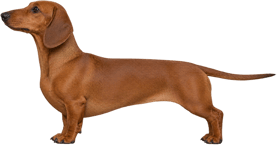 Dachshund 24 to 30 in crate
-
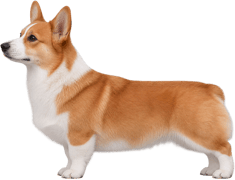 Pembroke Welsh Corgi 30 in crate
-
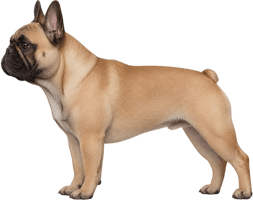 French Bulldog 24 to 30 in crate
-
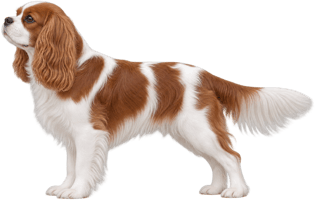 Cavalier King Charles Spaniel 24 to 30 in crate
-
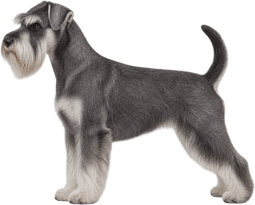 Miniature Schnauzer 24 in crate
-
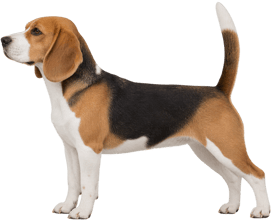 Beagle 30 in crate
-
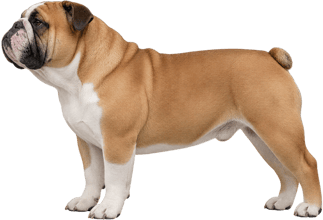 Bulldog 36 in crate
-
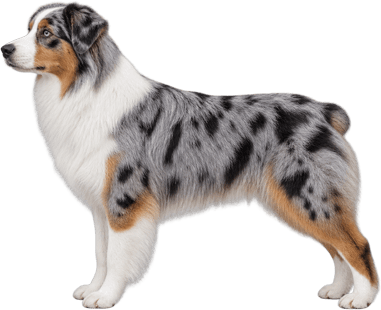 Australian Shepherd 36 to 42 in crate
-
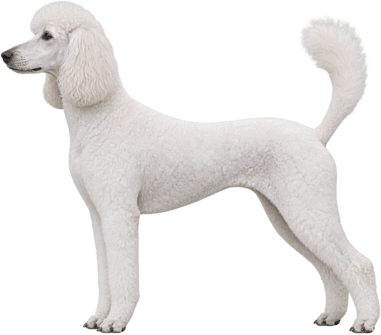 Poodle 36 to 42 in crate
-
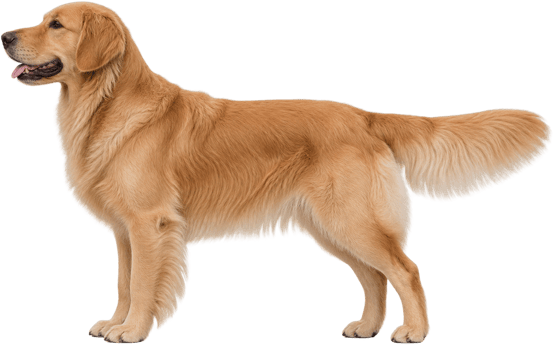 Golden Retriever 42 in crate
-
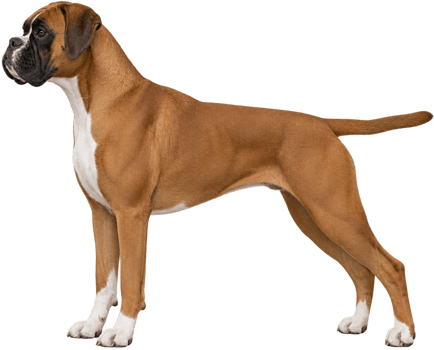 Boxer 42 in crate
-
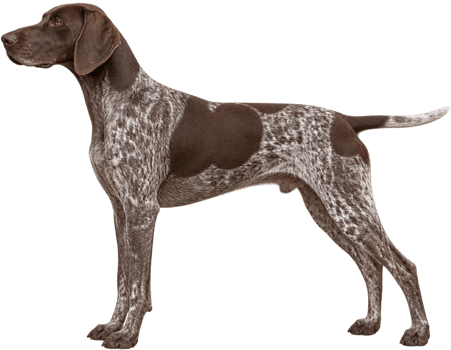 German Shorthaired Pointer 42 in crate
-
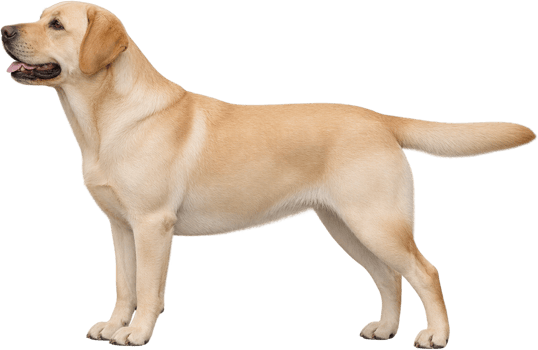 Labrador Retriever 42 in crate
-
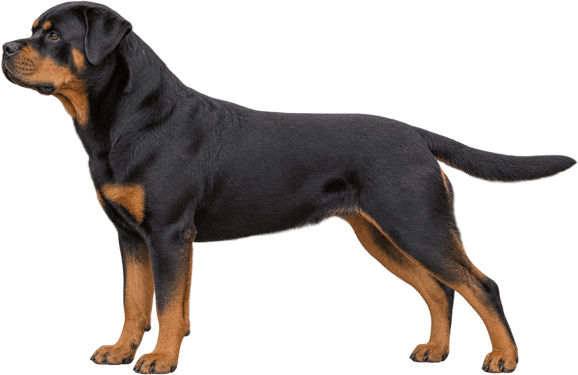 Rottweiler 48 in crate
-
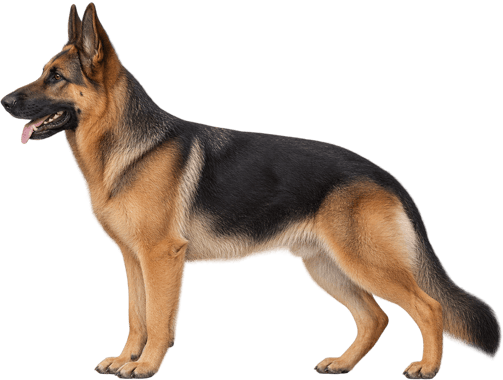 German Shepherd Dog 42 to 48 in crate
-
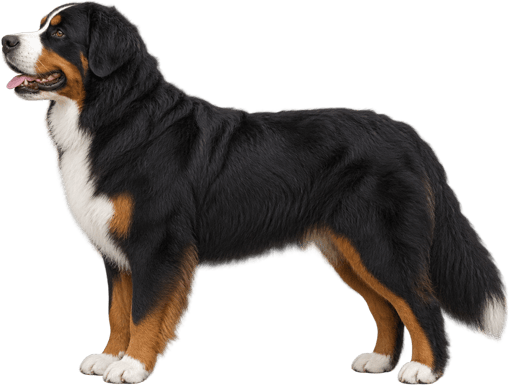 Bernese Mountain Dog 48 in crate
-
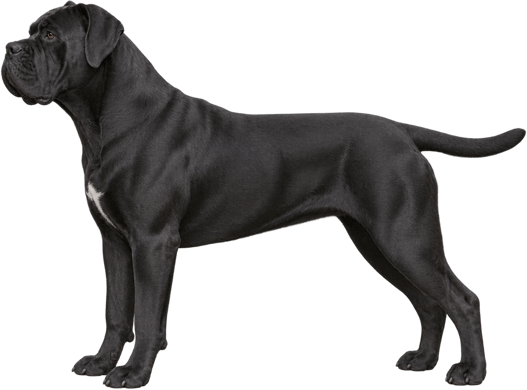 Cane Corso 48 in crate
-
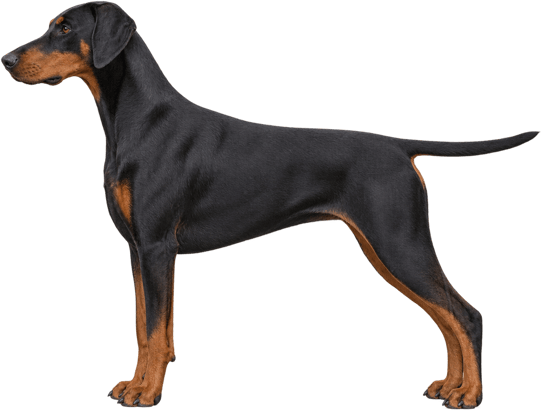 Doberman Pinscher 42 to 48 in crate
Use the breed as a starting point and your own measurement to decide. A male Labrador Retriever is often 10 pounds heavier than a female, and that can change the crate by one size.
Crate size for a Labrador Retriever
A Labrador Retriever needs a 42 inch crate. According to the American Kennel Club breed standard, adult males stand 22.5 to 24.5 inches at the shoulder and weigh 65 to 80 pounds, and females stand 21.5 to 23.5 inches and weigh 55 to 70 pounds. A very large male may need 48 inches, so measure before you order.
Crate size for a Golden Retriever
A Golden Retriever needs a 42 inch crate. The American Kennel Club gives adult males 23 to 24 inches at the shoulder and 65 to 75 pounds, and females 21.5 to 22.5 inches and 55 to 65 pounds. A small female can fit a 36 inch crate, but most owners buy 42 inches so the crate lasts.
Crate size for a German Shepherd
A German Shepherd needs a 42 or a 48 inch crate. Males stand 24 to 26 inches at the shoulder and females 22 to 24 inches, according to the American Kennel Club breed standard, and adults weigh 50 to 90 pounds. Choose 48 inches for a male over about 75 pounds or for any dog with a long back.
Crate size for a French Bulldog
A French Bulldog needs a 24 to 30 inch crate. The breed standard caps an adult at 28 pounds, and most stand 11 to 13 inches at the shoulder. French Bulldogs are short but wide in the chest, so many owners choose the 30 inch crate to give them room to turn.
See a crate next to real dogs
A size chart gives you numbers. Below is the size comparison itself, live on this page: an aluminium crate 88 centimetres long, about 35 inches, next to real dog breeds at the same scale.
The French Bulldog has room to spare. The Labrador Retriever is longer than the whole crate, nose to tail, which is exactly why a Labrador needs the 42 inch size and not the 36.
Buy the crate for the adult dog, not the puppy
A puppy grows for one to two years, and a good crate lasts ten. Buy the crate for the adult size of the breed and use a divider panel while your puppy is small.
A divider is a flat wire wall that clips inside the crate and makes the space smaller. You move it back every few weeks as your puppy grows and take it out once your dog is full grown. MidWest Homes for Pets, one of the largest crate makers, includes a divider with most of its wire crates and recommends sizing for the adult dog.
The alternative is a puppy crate now and a second crate a year later.
What a 42 inch dog crate looks like in your home
A 42 inch crate is about 107 centimetres long, 71 centimetres wide and 76 centimetres tall. Those numbers are hard to picture, so compare them with sizes you already know.
- Next to a person. The average adult woman in the United States is 63.5 inches tall, about 161 centimetres, according to the CDC. A 42 inch crate standing next to her reaches about her hip.
- Next to a credit card. A credit card is 85.6 millimetres long under the ISO/IEC 7810 standard, so the crate is about twelve and a half credit cards long.
- Next to a doorway. Most inside doors are 28 to 32 inches wide, according to the Home Depot door buying guide. The crate is 28 inches wide, so it only goes through short side first, with little room for your hands. Fold a wire crate flat before you move it between rooms.
Before you order, mark the crate’s footprint on your floor with masking tape: 107 by 71 centimetres for a 42 inch crate. Leave the tape for a day and walk around it. It shows the real floor space better than any product photo.
For shops that sell dog crates
Wrong size is the most common reason pet products come back. At Galaxus, a large Swiss online retailer, incorrect sizing caused 48 percent of all pet supply returns in 2025, as reported by GlobalPETS in July 2026.
The cause is easy to see from the shopper’s side. Your product page says 42 inches. The shopper cannot see how much floor 42 inches covers or if it fits their dog, so they guess. A wrong guess becomes a return, or a review that says “much bigger than expected”. Our guide on how to reduce returns in ecommerce explains why.
We have worked with shops selling crates, pet products and garden furniture since 2022, and their owners asked us for the same thing again and again: show the product next to a dog. A shopper cannot picture 42 inches, but every shopper knows how big their own dog is. A crate shown next to the shopper’s breed answers the question in one look.
Put that comparison on the product page itself, next to the photos, and not on a separate size guide page. A shopper who has to open a second page usually does not.
EasySizes adds the size comparison above to a product page.
Dog crate size questions
What size crate does a 50 pound dog need?
A 50 pound dog usually needs a 36 to 42 inch crate. Measure your dog’s length from nose to the base of the tail and add 4 inches. If the total is 36 inches or less, the 36 inch crate fits. If it is more, choose 42 inches.
Can a dog crate be too big?
Yes, for a puppy. A puppy with too much room often uses one end of the crate as a toilet, which slows house training. Buy the adult size and use a divider panel to make the space smaller until your puppy is grown.
What are the dimensions of a 42 inch dog crate?
A typical 42 inch wire crate is about 42 inches long, 28 inches wide and 30 inches tall, which is 107 by 71 by 76 centimetres. Heights differ between makers by several inches, so check the height on the product page.
Will a dog bed fit inside a crate?
A crate bed fits if it is sold for the same crate length, such as “42 inch crate bed”. A thick bed or pad raises your dog by 1 to 2 inches, so add that to the height you measured before you choose the crate.
Should I measure my dog standing or sitting?
Measure the length standing and the height both ways. Many dogs are taller when they sit up straight, and the crate needs to fit the taller number.